
Most ceramic waxes last about 2 to 8 weeks in real driving and up to 2 to 3 months in gentle use. A true ceramic coating is a different product, measured in years rather than weeks.
That gap can be surprising because both products may promise a glossy finish and water beading. But “ceramic” on a wax label doesn't make the product a bonded coating, and a fresh-looking hood doesn't tell you exactly how much protection remains. For Georgetown drivers, pollen, humidity, bug splatter, and I-75 road film can wear down a wax layer faster than ideal-use claims suggest.
Table of Contents
- How Long Ceramic Wax Lasts by Product Type
- Why Ceramic Wax Wears Off Faster Than a Coating
- What Shortens or Extends Ceramic Wax in Georgetown
- Three Georgetown Driving Patterns and Their Timelines
- How to Make One Coat of Ceramic Wax Last Longer
- Match Ultimate Wash to the Interval Already Chosen
How Long Ceramic Wax Lasts by Product Type
Ceramic wax is a short-cycle surface layer, not a multi-year coating. In ordinary driving, many waxes and wash-tunnel applications show their best beading and gloss for weeks, while gentler use can stretch the interval. The right comparison is the product type and the way you use the car, not the biggest number on a bottle.
| Product type | Typical life | Gentle best case | Fails early when |
|---|---|---|---|
| Tunnel or wash-bay super ceramic wax | 2–6 weeks | Up to 2–3 months | Weekly harsh washes or heavy road film |
| DIY ceramic spray wax or spray sealant | 1–3 months | 4–6 months | Applied over dirt or rained on too soon |
| Hybrid ceramic paste wax | 3–6 months | 6–12 months | Left unwashed so grit scours the film |
| Consumer ceramic coating, not wax | 1–2 years | 3–5 years | Prep is skipped or strong chemicals are used |
Those windows are practical ranges, not guarantees. Product formulas differ, and the way you apply, wash, park, and drive can move a wax toward the shorter or longer end.
What the rows mean in practice
Tunnel or wash-bay super ceramic wax is the quick option: it's applied during a wash, so you don't need to prep and buff the whole car yourself. While it's working, water gathers into distinct beads and the paint can look darker and slicker. When that effect fades, water spreads into flatter sheets, and a film of road grime may remain after a proper wash.
DIY ceramic spray wax or sealant gives you more control over application. A clean, cool panel and careful wiping help it form an even layer. Tight beads and a richer gloss are good signs it's still doing its cosmetic job; sheeting water and a flat-looking finish suggest it's due for a refresh. If you spray over dust or let rain hit before the product sets, performance can drop quickly.
Hybrid ceramic paste wax takes more hands-on work, but its thicker application can last longer than a quick tunnel treatment. It may keep the paint looking slick for months in gentle use. That doesn't mean it's durable enough to ignore: grit left on the surface can cause wash-related wear and dull the finish.
A consumer ceramic coating belongs in the table only as a contrast. It's a different kind of product, with a curing process and longer-lasting protection. Comparing its years-long claims with a wash-tunnel wax's weeks is like comparing a raincoat with a weatherproof jacket built into the car.
Practical rule: If you got the wax in a wash tunnel or applied it as a quick spray, judge it by the shorter row. Look at how water behaves after a clean rinse, not just the longest number on the label.
Why Ceramic Wax Wears Off Faster Than a Coating
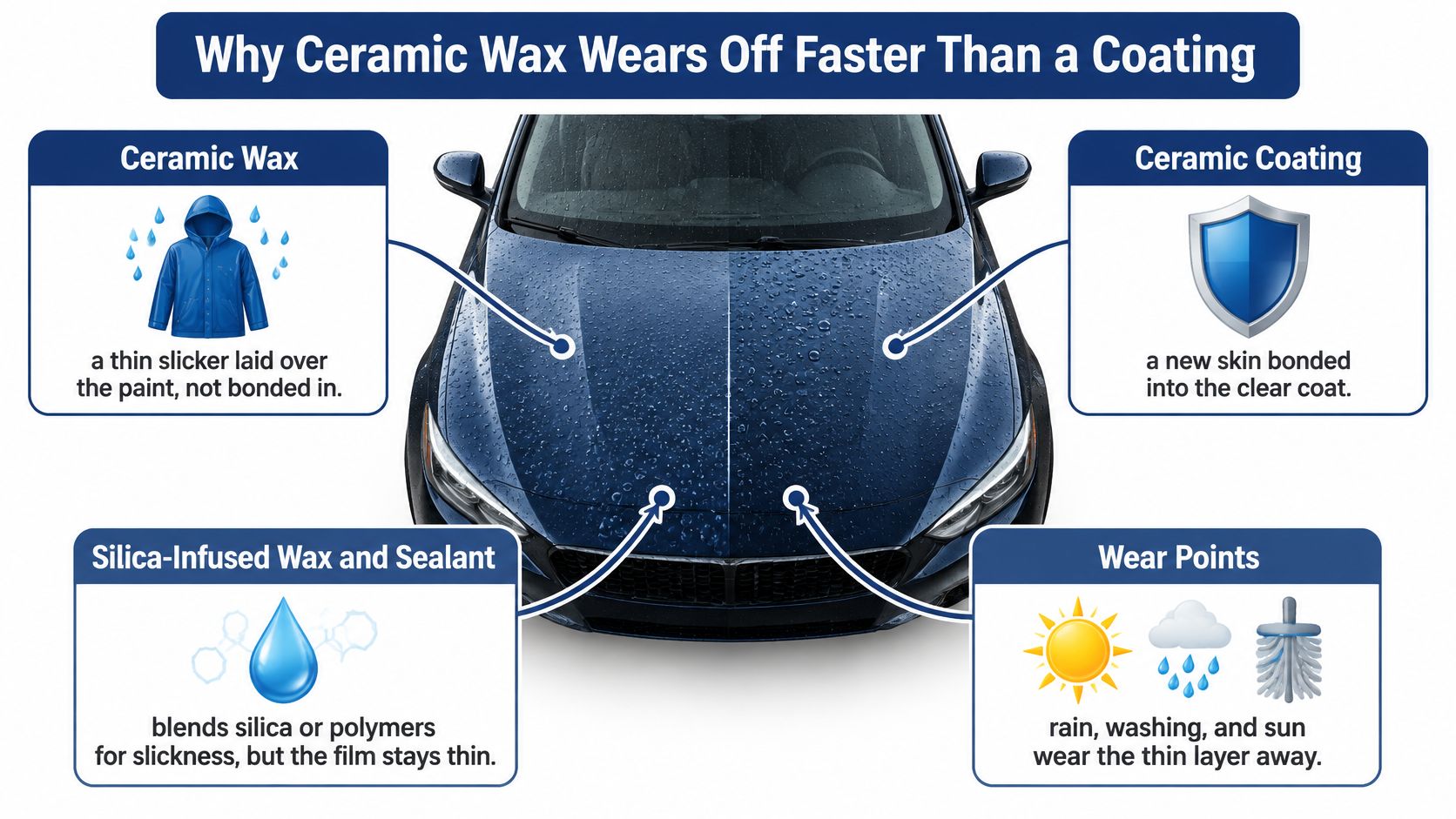
Think of ceramic wax as a thin slicker laid over the paint, not a new skin bonded into the clear coat. It can make the surface look glossy and help water roll away, but it also takes the wear from washing, road grime, and sun. A true ceramic coating is designed to cure into a more durable layer, so it's not useful to measure the two products on the same timeline.
Take a spray wax applied to a clean car. At first, water forms tight beads on the hood, and the paint looks freshly detailed. After regular drives and washes, those beads grow larger, the gloss softens, and water may begin to spread rather than gather. Later, even a clean rinse can leave the panel looking flat.
That fade path is useful, but beading isn't a perfect test. Detergent residue or a layer of road film can make water spread even when a little wax remains. In the other direction, a fresh-looking bead pattern doesn't prove the paint is protected from every contaminant or scratch. Wash the panel first, then judge its water behavior and finish.
Why preparation and curing matter
Ceramic-infused waxes and sealants mix silica or ceramic-like ingredients with wax or polymer carriers. The ingredients can improve slickness, shine, and water behavior, but the product still forms a thin surface film that wears away. Applying it over dust or oily residue gets in the way of an even layer.
For a hand-applied product, start with clean, cool, dry paint and follow its directions for application and curing. Many products need a short dry period before rain or washing. If the panel gets wet too soon, the film may not set as intended.
The difference is clear in a typical scenario: one car gets a quick spray application after a thorough wash and stays under cover; another receives a tunnel treatment before a wet, dirty commute. Neither product has become a coating, but the second car puts its thin layer under more immediate stress.
Watch the car's own fade pattern instead of treating a coating warranty as a promise about wax. When tight beads give way to sheeting after a clean rinse, the wax is no longer performing as it did when fresh.
What Shortens or Extends Ceramic Wax in Georgetown
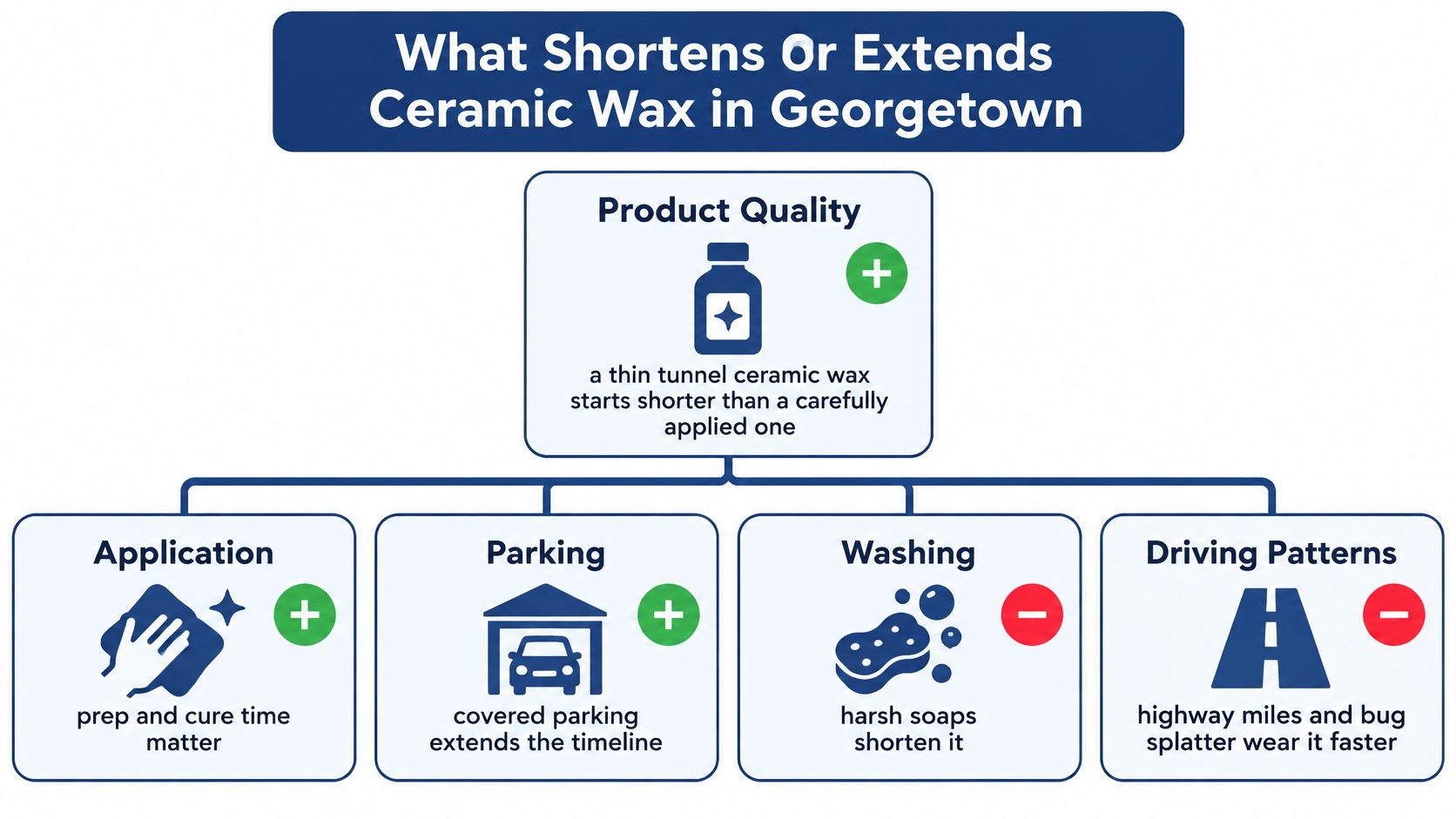
For local driving, product type and application make the biggest difference. A quick tunnel treatment starts with a thinner, more temporary layer than a carefully applied hybrid paste. Applying wax over dust, working on a hot panel in direct sun, or driving into rain before it sets can leave the film uneven or reduce how well it holds.
Washing comes next. A clean mitt and pH-neutral car shampoo lift dirt without adding unnecessary abrasion or harsh chemistry. Dish soap, strong degreasers, wheel-cleaner overspray on painted panels, and dirty automatic-wash cloths can strip away slickness. The result may look like failed wax when the wash method is the main problem.
Local conditions change the wear
Georgetown's mix of humid summers, pollen, tree sap, and bug activity gives contaminants plenty of chances to settle on paint. Along I-75, road film and grit add another layer of wear, especially on the hood, front bumper, and lower doors. In winter, brine and grime cling to those areas and can make the finish look dull between washes.
How often you wash matters, but more washing isn't automatically better. Letting bugs or sap sit can make them harder to remove, while frequent scrubbing with harsh products wears the film down. The aim is to remove buildup with gentle tools and a suitable car shampoo, not to attack the surface every time it looks dusty.
Parking also matters. Direct sun heats the paint and speeds the visible fading of a surface layer. A garage or covered parking spot reduces that exposure, though it can't make wax permanent.
Stack harsh conditions, such as open-air parking and regular brush washes, and expect the shorter end of the product's range. Gentle washing and covered parking give the product a better chance of reaching its longer end.
For an I-75 commuter, road grime may matter more than the label's best-case claim. For a car that spends most of its time garaged and is washed by hand, the same product may hold its gloss longer. Either way, check the finish after washing so dirt and detergent don't distort your read of the wax.
Three Georgetown Driving Patterns and Their Timelines
A commuter's car and a garaged family vehicle can start with the same wax and end up looking different. What matters is the combination of driving, parking, and washing, plus what you see on the paint after a clean rinse.
The I-75 commuter
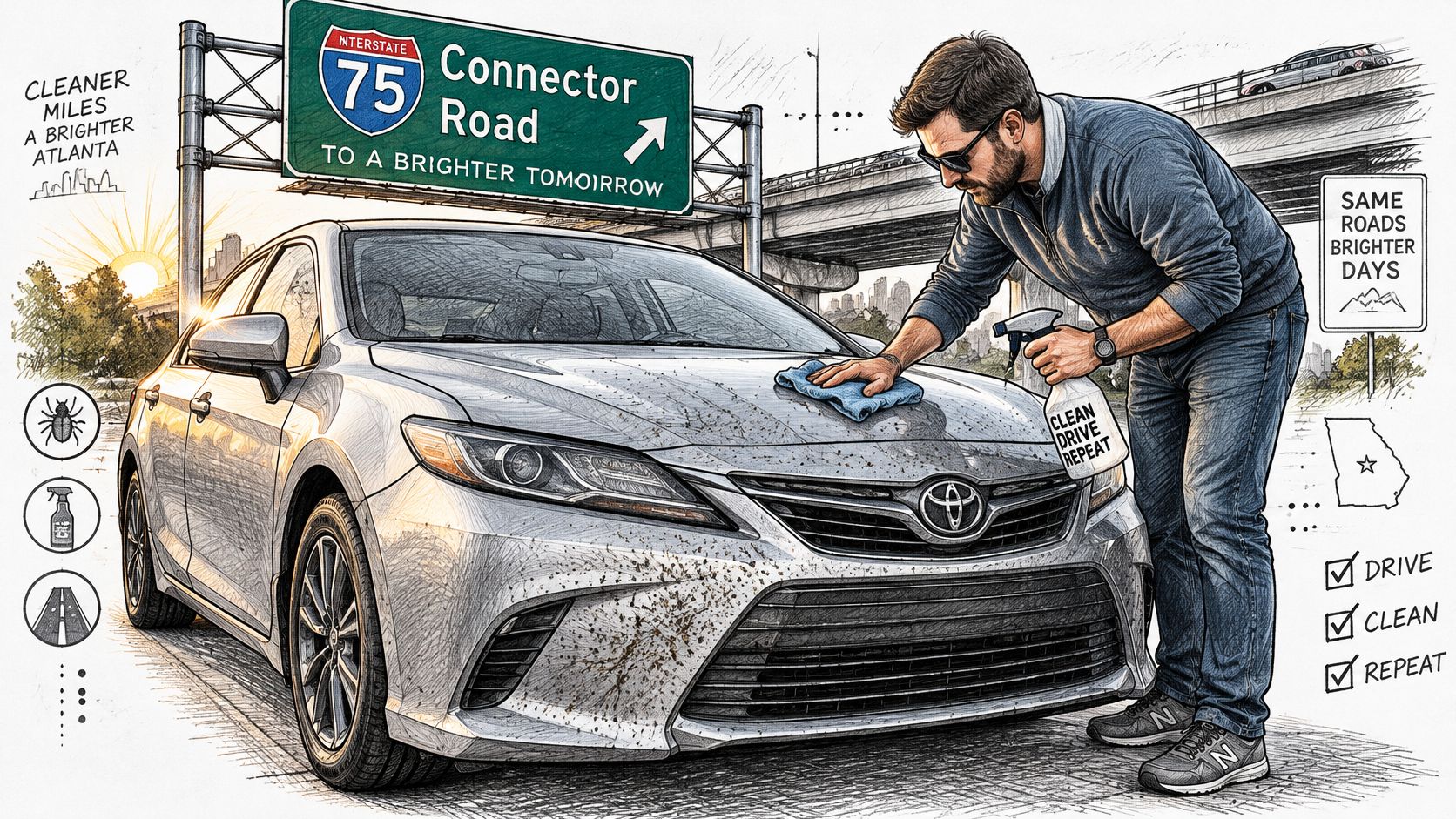
Say you drive I-75 most weekdays, park outside near Connector Road, and rely on a basic wash every couple of weeks. Bugs, road film, and outdoor exposure build up before you wash again. A tunnel ceramic wax may start looking tired after a few weeks, so plan to check it around the one-month mark in summer rather than assume it will last for the full label claim.
After a clean rinse, check the hood and windshield pillars. Tight beads suggest the surface still has some hydrophobic behavior. If water spreads into flat sheets and the paint still looks dull after washing, it may be time for a refresh.
The following video shows a wash scenario that may feel familiar to Georgetown drivers.
The garaged family car
Now consider a family car used mainly for school runs and local errands. It stays in a garage, gets washed gently every few weeks, and doesn't spend long stretches in highway grime. A spray wax may keep its beading longer than it would on the commuter car. A hybrid paste can suit an owner who wants to put in more application work and prefers fewer refreshes.
If winter brine gets onto the car, rinse it off instead of letting it sit until the next full wash. Check the hood and windshield pillars after cleaning: tight beads are a useful sign that the surface still sheds water, while flat sheeting and a chalky look suggest it needs attention.
Winter and early spring
Brine, pollen, and sap can arrive close together, and contaminants may sit on the surface between washes. Even a careful owner should expect a ceramic wax to show obvious wear sooner in these conditions. A fresh application that gets hit by a storm on the same day is a separate case: it may fail early because it didn't get the dry time it needed, not because the product normally lasts only that long.
How to Make One Coat of Ceramic Wax Last Longer
A good maintenance routine helps the wax reach the better end of its own range. It can't turn a short-cycle tunnel treatment into a multi-year coating, but it can keep dirt, harsh chemicals, and poor drying from wearing the film down unnecessarily.
Wash before buildup gets stubborn. During pollen and bug season, wash as needed to remove residue before you have to scrub hard. Use a pH-neutral car shampoo and a clean mitt, working from the top down.
Remove bugs and sap with the right product. Use a dedicated bug or sap remover and follow its label. Scrubbing dry contaminants can drag grit across the paint.
Keep harsh household cleaners off the paint. Dish soap and household degreasers can strip the slick feel you're trying to preserve. Use products made for automotive finishes.
Dry with clean microfiber. A clean towel reduces the chance of rubbing grit into the wax. If mineral spots are a problem, a spot-free rinse can help.
Keep wheel cleaner on the wheels. Strong cleaner that runs onto lower doors or rockers can affect the wax on painted panels. Apply it carefully and rinse thoroughly.
Choose shade or a garage when you can. Keeping a freshly treated car out of direct sun and rain gives the surface time to settle according to the product instructions.
Reapply based on the finish, not just the calendar. After a proper wash, check whether water still beads or spreads into flat sheets. That check helps avoid both premature reapplication and leaving a tired surface untreated.
There's a balance: washing often enough to remove Kentucky pollen and bugs helps, but aggressive chemistry and rough contact can undo that care. For routine cleaning in Georgetown, VIP Car Wash offers wash options that help remove road grime without you having to tackle every wash by hand.
Use the row that matches your product to set expectations. If it's a tunnel wax, a refresh every so often is part of the deal. A hybrid paste may go longer, but it still needs attention when its beading and gloss fade.
Match Ultimate Wash to the Interval Already Chosen
A wash that adds wax can make sense when the finish is ready for a refresh, but it shouldn't set a new timeline for the car. Use the interval that fits your product and driving pattern, then choose a cleaning visit when water sheets after a gentle wash.
At VIP Car Wash on Connector Road, the Ultimate Wash costs $24 per wash and includes super ceramic wax along with a hand bug scrub, hand pressure wash, soft cloth treatment, power dry, spot-free rinse, undercarriage wash, and other wash features. The bug scrub and wash help remove the contaminants that cover the paint, while the new wax provides a fresh short-cycle layer. Tire shine is for the tires, not an extension of paint protection.
For the in-between visits, the Monthly Unlimited Wash Club includes priority service and access to all exterior wash levels. That can help you keep pollen, sap, and road film from sitting on the paint between refreshes. The wash removes grime; it doesn't turn super ceramic wax into a long-term coating.
A garaged car with a hybrid paste should follow its own longer interval rather than getting extra wax because it's visiting a wash. A commuter whose clean hood and windshield pillars have stopped beading can use the Ultimate Wash as a practical reset.
VIP Car Wash offers exterior wash options in Georgetown, including the Ultimate Wash with super ceramic wax and the Monthly Unlimited Wash Club for regular cleaning visits. Choose the wash that fits your car's condition and the short-cycle protection it needs, then visit VIP Car Wash in Georgetown.